

Losing a tooth can be frustrating for reasons that go beyond appearance. You might find yourself chewing differently, avoiding certain foods, or feeling self-conscious when you smile. Even a single missing tooth can affect your confidence and day-to-day comfort more than you expected.
If you’re looking into tooth replacement options, you’ve probably come across two common solutions: dental implants and dental bridges. Both are designed to restore the look and function of your smile, but they work in very different ways. What works well for one person may not be the best fit for someone else.
Understanding the differences between dental implants and bridges can help you feel more confident when discussing treatment with your dentist. Let’s take a closer look at how each option works and what factors may influence the decision.
What Is a Dental Implant?
A dental implant is designed to replace a missing tooth from the root up. Unlike a bridge, which sits above the gums and relies on neighbouring teeth for support, an implant is placed directly into the jawbone where the natural tooth root once existed.
Once the implant has healed and integrated with the surrounding bone, a custom dental crown is attached to the top. The final result is intended to look, feel, and function similarly to a natural tooth.
Many patients exploring dental implants in Burlington are drawn to the fact that implants stand on their own. The neighbouring teeth typically do not need to be altered to support the replacement tooth.
Because an implant is placed in the jawbone, it may help support the bone in the area after tooth loss. This is one reason some patients consider implants when comparing tooth replacement options.
Implant treatment often involves multiple stages and may require a longer overall timeline than some other tooth replacement options. While that process may not be ideal for everyone, many patients appreciate that the implant replaces both the visible tooth and the root beneath the gums.
What Is a Dental Bridge?
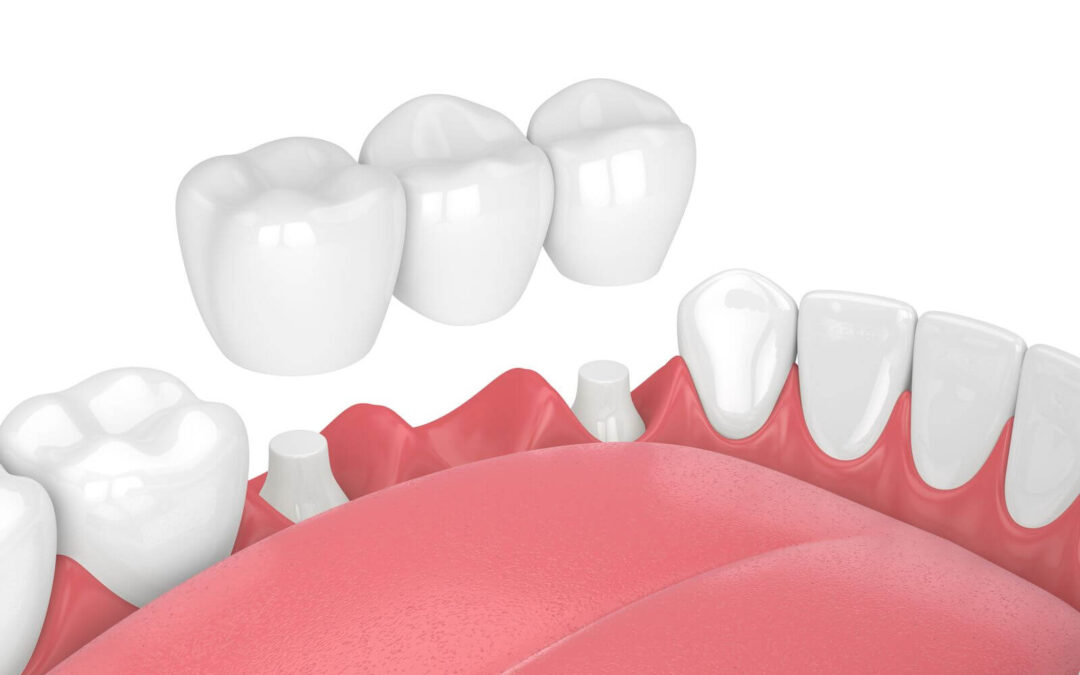
A dental bridge is another common way to replace a missing tooth. Instead of placing a replacement root into the jawbone, a bridge fills the gap by connecting a replacement tooth to neighbouring teeth.
A traditional bridge consists of a replacement tooth, called a pontic, that is supported by crowns attached to the teeth on either side of the gap. Those supporting teeth help hold the restoration securely in place.
Patients researching dental crowns and bridges often appreciate that bridges have been used successfully for many years and can provide a natural-looking result.
For some people, a bridge may offer practical advantages. Depending on the situation, treatment can sometimes be completed more quickly than implant treatment because there is no healing period associated with implant placement.
A bridge can also be a reasonable option when neighbouring teeth already require crowns. In those situations, restoring the supporting teeth and replacing the missing tooth may fit naturally within the same treatment plan.
Neither treatment is automatically better than the other. The right option depends on a patient’s oral health, treatment goals, and personal preferences.
Dental Implant vs Dental Bridge: Key Differences
At first glance, dental implants and bridges can seem pretty similar. Both are designed to replace missing teeth, improve chewing ability, and restore the appearance of your smile. However, there are several important differences.
A dental implant is anchored directly into the jawbone and functions independently. A bridge relies on neighbouring teeth for support.
Other differences may include:
- Whether neighbouring teeth need to be modified
- The overall treatment timeline
- Cleaning and maintenance requirements
- Bone support considerations
- Long-term treatment goals
For example, traditional bridges often require the teeth beside the gap to be prepared for crowns. With an implant, neighbouring teeth can often remain untouched.
For Burlington patients comparing these two options, the decision often comes down to factors that aren’t immediately obvious. While online research can be helpful, an assessment allows your dentist to evaluate your specific situation and explain how each option may fit your needs both now and in the future.
Rather than focusing on which treatment is “better,” it can be more helpful to ask which option best fits your oral health needs, lifestyle, and long-term goals.
When Might a Dental Implant Be Considered?
Dental implants are often considered by patients who want a replacement tooth that functions independently from the surrounding teeth. Because the implant is placed directly into the jawbone, it does not rely on neighbouring teeth for support.
A dental implant may be considered when:
- A single tooth is missing
- The neighbouring teeth are healthy and do not require crowns
- There is sufficient bone available to support treatment
- Preserving surrounding tooth structure is a priority
- Long-term function is an important consideration
However, dental implants are not automatically the best option for everyone. Treatment recommendations depend on factors such as oral health, medical history, lifestyle considerations, and personal preferences. That’s why a consultation is important before making a decision.
When Might a Dental Bridge Be Considered?
A dental bridge may be considered when replacing a missing tooth without implant surgery is preferred or when other factors make a bridge the more practical option.
Some people are surprised to learn that bridges are still a common treatment option today. In reality, bridges continue to be a reliable and commonly recommended treatment option in the right circumstances.
A bridge may be considered when:
- Adjacent teeth already require crowns
- A patient prefers a non-surgical solution
- Implant treatment may not be suitable
- Treatment goals align with a bridge-supported restoration
- The overall treatment plan supports this approach
The most important thing is not choosing the treatment that sounds most advanced. It’s choosing the treatment that best fits your oral health needs and goals.
What Factors Help Determine the Right Option?
Choosing between a dental implant and a bridge is rarely as simple as comparing two treatment options online. Every smile is different, and several factors may influence which option is ultimately recommended.
Your Overall Oral Health
Healthy gums and supporting structures are important when planning any type of restorative treatment. Existing dental concerns may need to be addressed before replacing a missing tooth.
Bone Support
Since implants are placed into the jawbone, bone quantity and quality are important considerations. Your dentist may recommend dental imaging to gather more detailed information and help determine which treatment options may be appropriate.
The Condition of Neighbouring Teeth
The teeth beside the missing tooth often play a significant role in treatment planning. If those teeth already need restorative work, a bridge may fit naturally into the overall treatment plan. If they are healthy, preserving them may become an important consideration.
Lifestyle and Personal Preferences
Every patient has different priorities. Some people are comfortable with a longer treatment process, while others prefer an option that may involve fewer treatment stages. Personal preferences are an important part of the decision-making process.
What Happens During a Tooth-Replacement Consultation?
During a consultation, your dentist will review your dental and medical history, examine your teeth and gums, and assess the area where the tooth is missing.
Depending on your situation, additional records or imaging may be recommended to support treatment planning.
The discussion may include:
- Available treatment options
- The condition of neighbouring teeth
- Potential benefits and limitations of each approach
- Treatment stages and expectations
- Any questions or concerns you may have
The goal is to help you understand your options and feel confident about the next steps.
Dental Implants and Bridges FAQs
Is a dental implant better than a bridge?
Not necessarily. Both dental implants and bridges can be effective ways to replace missing teeth. The best choice depends on factors such as oral health, bone support, neighbouring teeth, and treatment goals.
Does a dental bridge require work on the neighbouring teeth?
Traditional dental bridges often require the neighbouring teeth to be prepared for crowns that support the bridge. Your dentist can explain whether this would apply in your specific situation.
How long does dental implant treatment take?
Treatment timelines vary from person to person. Some cases involve multiple stages and healing periods, while others may follow a different schedule. Your dentist can provide a more accurate estimate after evaluating your needs.
Can everyone get dental implants?
No. Dental implant candidacy depends on several factors, including oral health, bone support, medical history, and overall treatment goals. A consultation is needed to determine whether implant treatment may be appropriate.
How should I choose between an implant and a bridge?
The best way to choose is through a personalized consultation. Your dentist can assess your oral health, discuss your priorities, and explain which option may be most suitable for your situation.
Talk to Appleby Dental About Replacing a Missing Tooth
If you’re exploring ways to replace a missing tooth, understanding your options is the first step toward making a confident decision.
At Appleby Dental Professionals, we take the time to explain treatment options clearly and answer your questions in a comfortable, supportive environment. Every patient has different priorities, concerns, and goals, which is why recommendations are always based on individual needs.
If you’re unsure whether a dental implant or bridge may be right for you, a consultation can be a good place to start.
To learn more or schedule an appointment, contact Appleby Dental Professionals and speak with our team about replacing a missing tooth.